


Moot Court Hall Exercise
Where Classroom Theory Meets Courtroom Reality
Moot Court & Advocacy Skills: Mastering the Art of Litigation
“The Crucible of Advocacy”
The Courtroom Experience: Where Theory Meets Practice
“Step out of the classroom and into the shoes of an advocate. Our Moot Court Hall is where your journey to the Bar begins.”
Our Commitment to Practical Training
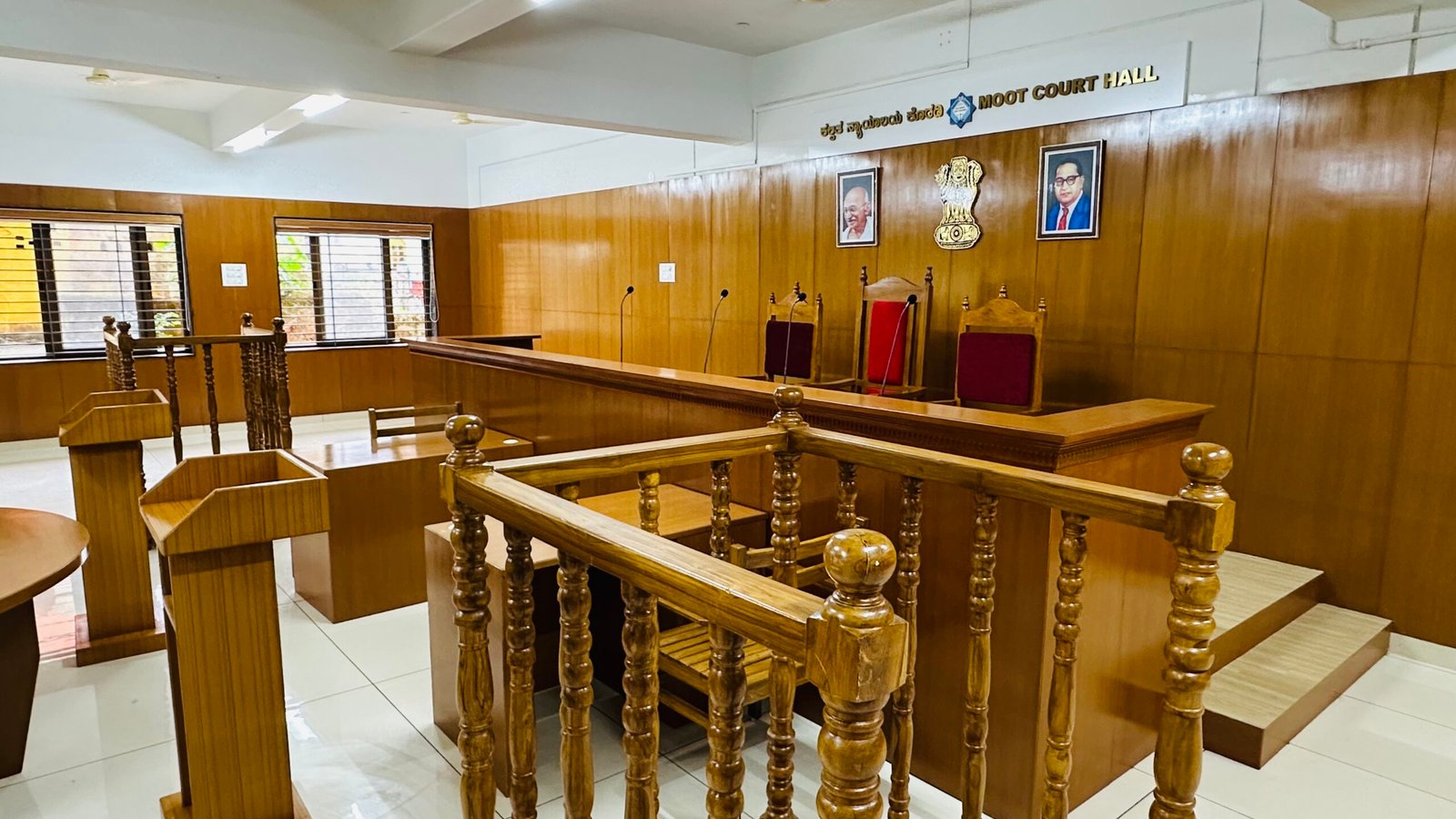
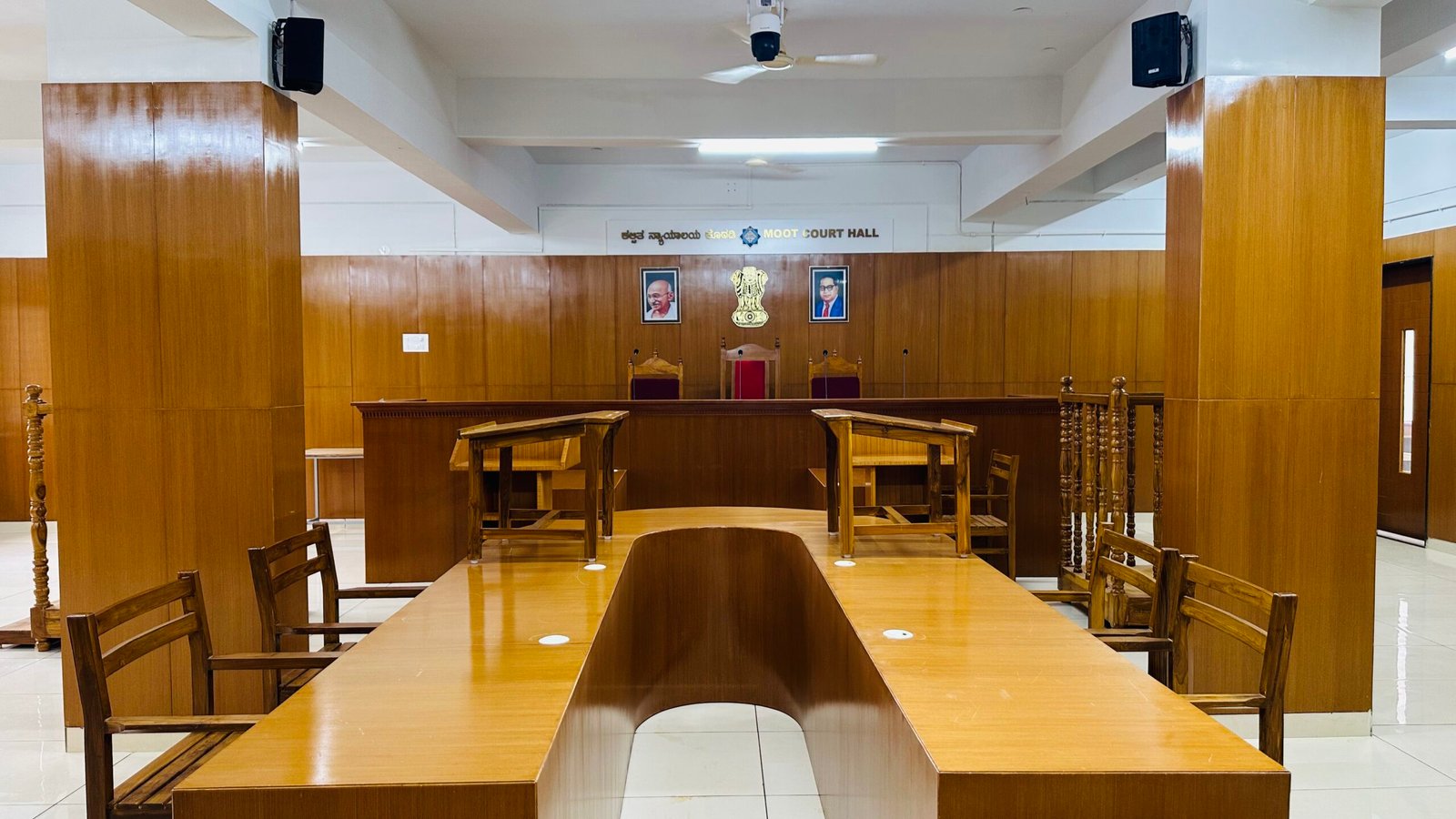
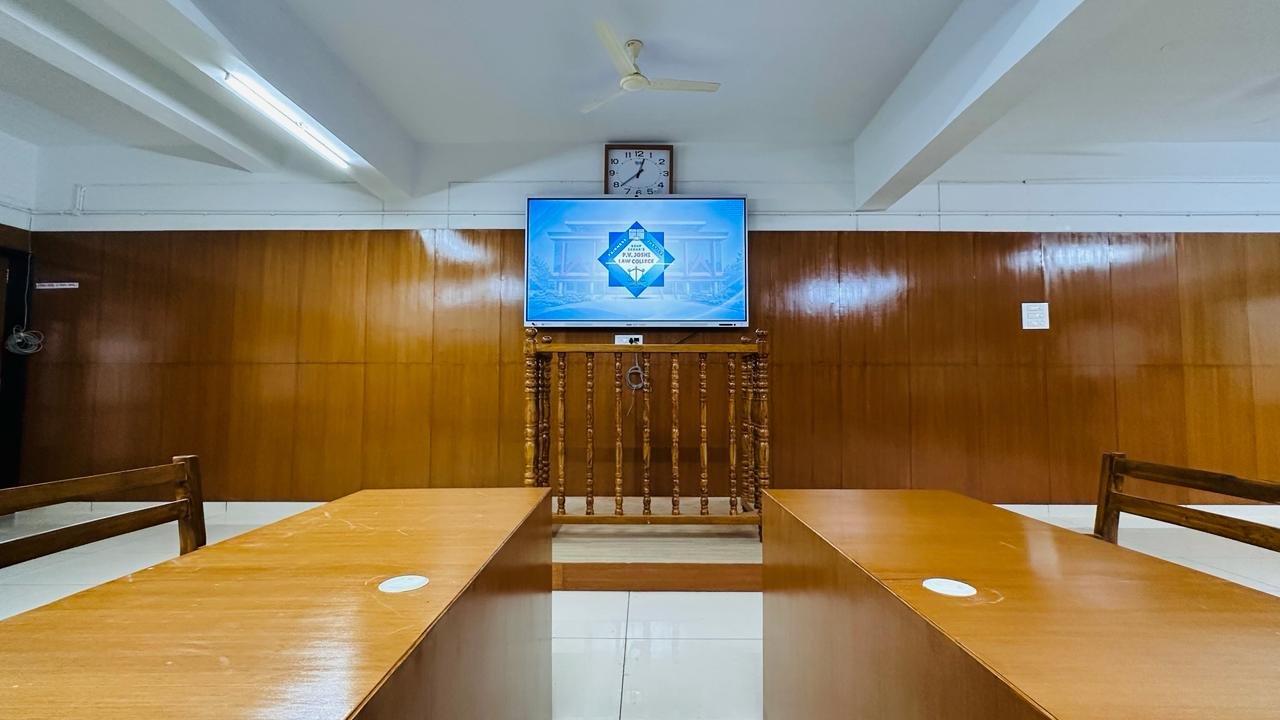
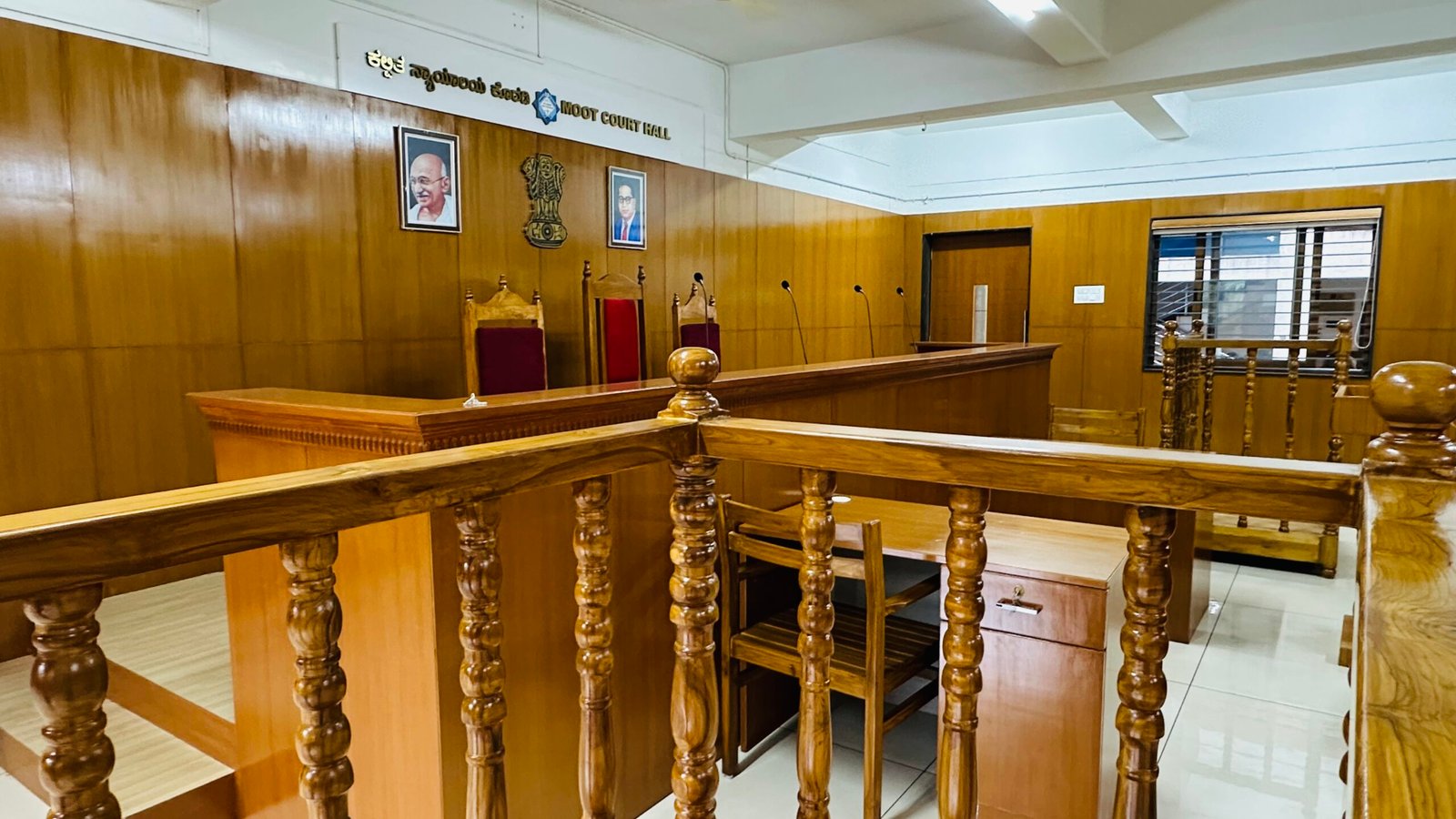
At DBHP Sabha’s Shri P. V. Joshi Law College, Dharwad, we believe that a law degree is only as strong as the advocate behind it. In compliance with the BCI Rules of Legal Education, our 3-year LLB curriculum integrates mandatory Moot Court exercises. We provide a state-of-the-art Moot Court Hall designed to replicate the atmosphere of a real courtroom, ensuring our students are “court-ready” upon graduation.
The BCI Moot Court Mandate >>
Per BCI regulations, students undergo a rigorous clinical course that focuses on the following components:
Moot Court Exercises: Students are assigned case problems—both civil and criminal—that require extensive legal research, drafting of pleadings, and oral arguments.
Observance of Trials: Students are required to observe trials in real courts (District and Session Courts) to understand court decorum, the examination of witnesses, and procedural nuances.
Interviewing Techniques & Pre-trial Preparations: Training in client interviewing, case analysis, and the preparation of case files (briefs).
Advocacy Skills: Development of communication, persuasive argumentation, and courtroom etiquette.
- • **Crisis Management:** Negotiators must remain calm and adaptable under pressure. Our training builds the emotional intelligence required to handle high-stakes disputes while maintaining professional decorum. • **Strategic Preparation:** Students learn to research and identify the Best Alternative to a Negotiated Agreement (BATNA), ensuring they never enter a negotiation without a clear strategy and fallback plan.
- Minimum GPA/grade requirements as set by the university.
- For graduate programs: a recognized bachelor’s degree with required CGPA.
- For graduate programs: a recognized bachelor’s
The Moot Court Hall: Our Simulated Courtroom
Our Moot Court Hall provides the perfect environment for:
Internal Moot Court Competitions: Weekly or monthly mock trials organized by the Moot Court Committee (MCC).
Client Counseling: Dedicated zones for students to practice intake interviews with “mock clients.”
Appellate Advocacy: Practicing the art of arguing complex points of law before a panel of “judges” (faculty or guest legal practitioners).
- • **Crisis Management:** Negotiators must remain calm and adaptable under pressure. Our training builds the emotional intelligence required to handle high-stakes disputes while maintaining professional decorum. • **Strategic Preparation:** Students learn to research and identify the Best Alternative to a Negotiated Agreement (BATNA), ensuring they never enter a negotiation without a clear strategy and fallback plan.
- Minimum GPA/grade requirements as set by the university.
- For graduate programs: a recognized bachelor’s degree with required CGPA.
- For graduate programs: a recognized bachelor’s
Why Moot Court Matters
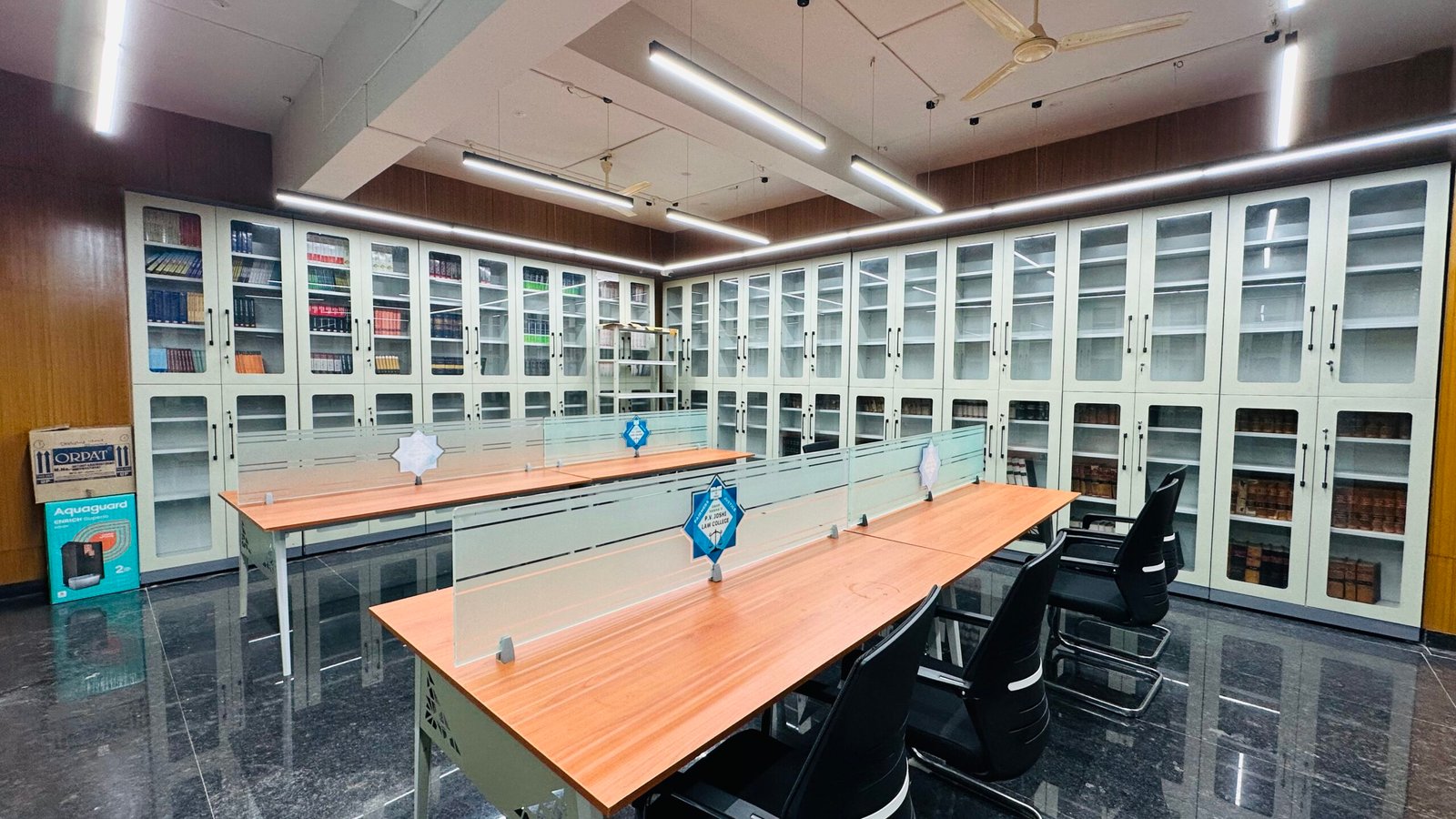
Research Prowess: You will learn to navigate law libraries, journals, and digital legal databases to build airtight arguments.
Drafting Skills: Hands-on experience in drafting plaints, written statements, affidavits, and memorandums of appeal.
Professional Confidence: Overcoming stage fright and developing the ability to think on your feet under the pressure of judicial questioning.
Ethics: Understanding the duties of an advocate toward the court, the client, and the opposing counsel.
- Completed secondary education (HSC/A-Level/Equivalent).
- Minimum GPA/grade requirements as set by the university.
- For graduate programs: a recognized bachelor’s degree with required CGPA.
- For graduate programs: a recognized bachelor’s
Student Participation
Every student in the 3-year LLB program will participate in:
Mandatory Clinical Assignments: Integrated into the curriculum for each semester.
Mooting Workshops: Annual training sessions conducted by senior advocates and alumni.
National/International Competitions: The college provides institutional support for students to represent DBHP Sabha’s Shri P. V. Joshi Law College, Dharwad in prestigious national moot court competitions across India.
Significance of the Moot Court Committee
• Practical Advocacy: It teaches students how to structure legal arguments, conduct in-depth legal research, draft memorials (written submissions), and effectively present oral arguments before a court.
• Courtroom Exposure: Moot court exercises replicate the proceedings of District Courts, High Courts, and the Supreme Court, enabling students to gain practical courtroom experience and confidence in litigation.
• Professionalism: Students learn court etiquette, legal ethics, professional conduct, and the ability to think critically and respond confidently to questions from judges.
• Career Advancement: Participation in moot court competitions enhances employability, as law firms, corporate legal departments, and senior advocates highly value advocacy and research skills gained through such experiences.
• Compliance with BCI Standards: The Bar Council of India requires institutions to provide clinical legal education. An active Moot Court Committee reflects the institution’s commitment to meeting these academic and professional standards.
Moot Court Committee (MCC)
About the Moot Court Committee
The Moot Court Committee (MCC) serves as the cornerstone of practical legal education within the institution. Established to replicate real-world judicial proceedings, the committee provides students with invaluable opportunities to develop legal research, drafting, and advocacy skills. Through various moot court activities and competitions, students gain firsthand experience in applying legal principles, presenting arguments, and understanding courtroom procedures. The committee is committed to nurturing future legal professionals by bridging the gap between academic learning and practical legal practice.
Our Objectives
• Developing Legal Research Skills: To train students in conducting comprehensive legal research using statutes, case laws, legal databases, and judicial precedents.
• Enhancing Advocacy Skills: To provide practical training in oral advocacy, argument presentation, cross-examination techniques, and client counseling.
• Memorial Drafting Excellence: To help students master the art of preparing precise, well-structured legal memorials, briefs, and written submissions.
• National and Competitive Exposure: To encourage and facilitate student participation in prestigious intra-collegiate, state-level, national, and international moot court competitions.
• Professional Skill Development: To cultivate critical thinking, analytical reasoning, courtroom etiquette, and confidence essential for a successful legal career.
Activities & Initiatives
• Intra-College Moot Court Competition: An annual flagship event that provides students with a platform to demonstrate their legal research, drafting, and advocacy skills while receiving valuable feedback from experienced legal professionals and faculty members.
• Training Workshops: Regular workshops are organized on essential topics such as legal research methodologies, case analysis, citation formats, memorial drafting, and courtroom etiquette to strengthen students’ practical legal knowledge.
• Guest Lectures and Expert Interactions: The committee frequently invites distinguished advocates, legal scholars, and members of the judiciary to share their experiences and provide insights into contemporary legal issues and professional practice.
• Advocacy Development Sessions: Specialized training programs are conducted to enhance public speaking, argument formulation, rebuttal techniques, and oral presentation skills.
• Mock Court Proceedings: Students participate in simulated court proceedings that replicate real courtroom environments, helping them gain confidence and practical litigation experience.
Committee Structure
• Faculty Coordinator: [Name/Designation]
• Student Convenor: [Name]
• Student Secretary: [Name]
• Executive Members: [List of Student Representatives]