


Moot court committee
Cultivating the Advocates of Tomorrow.
About the Committee
The Moot Court Committee (MCC) is the heartbeat of our practical training program. Designed to simulate the actual judicial process, the committee provides students with a platform to hone their research, drafting, and oral advocacy skills. We believe that legal education is incomplete without the “art of lawyering,” and the MCC is dedicated to preparing our students for the rigors of the legal profession.
Significance
Practical Advocacy: It teaches students how to structure legal arguments, conduct deep research, draft formal memorials (written pleadings), and present oral arguments.
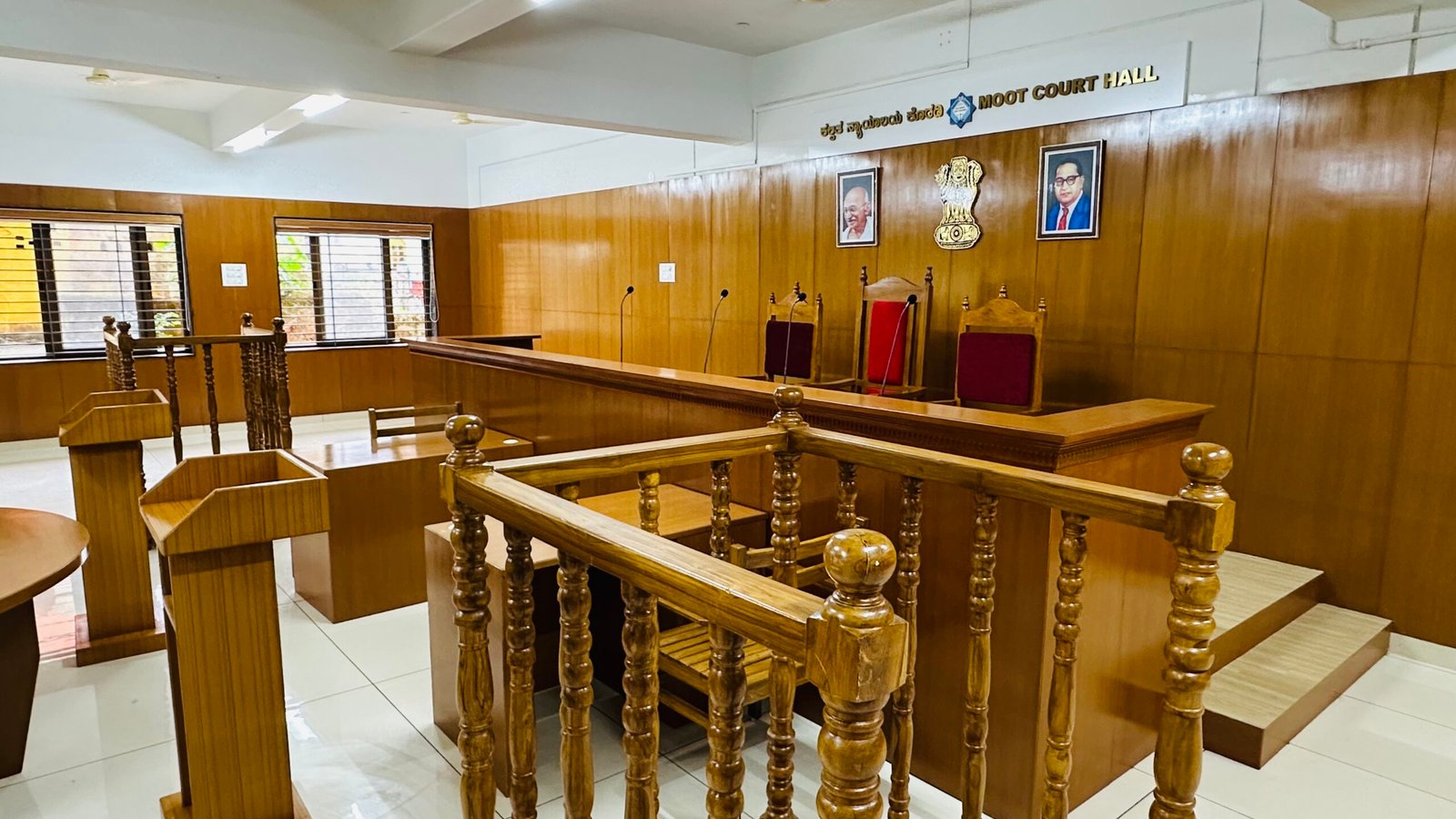
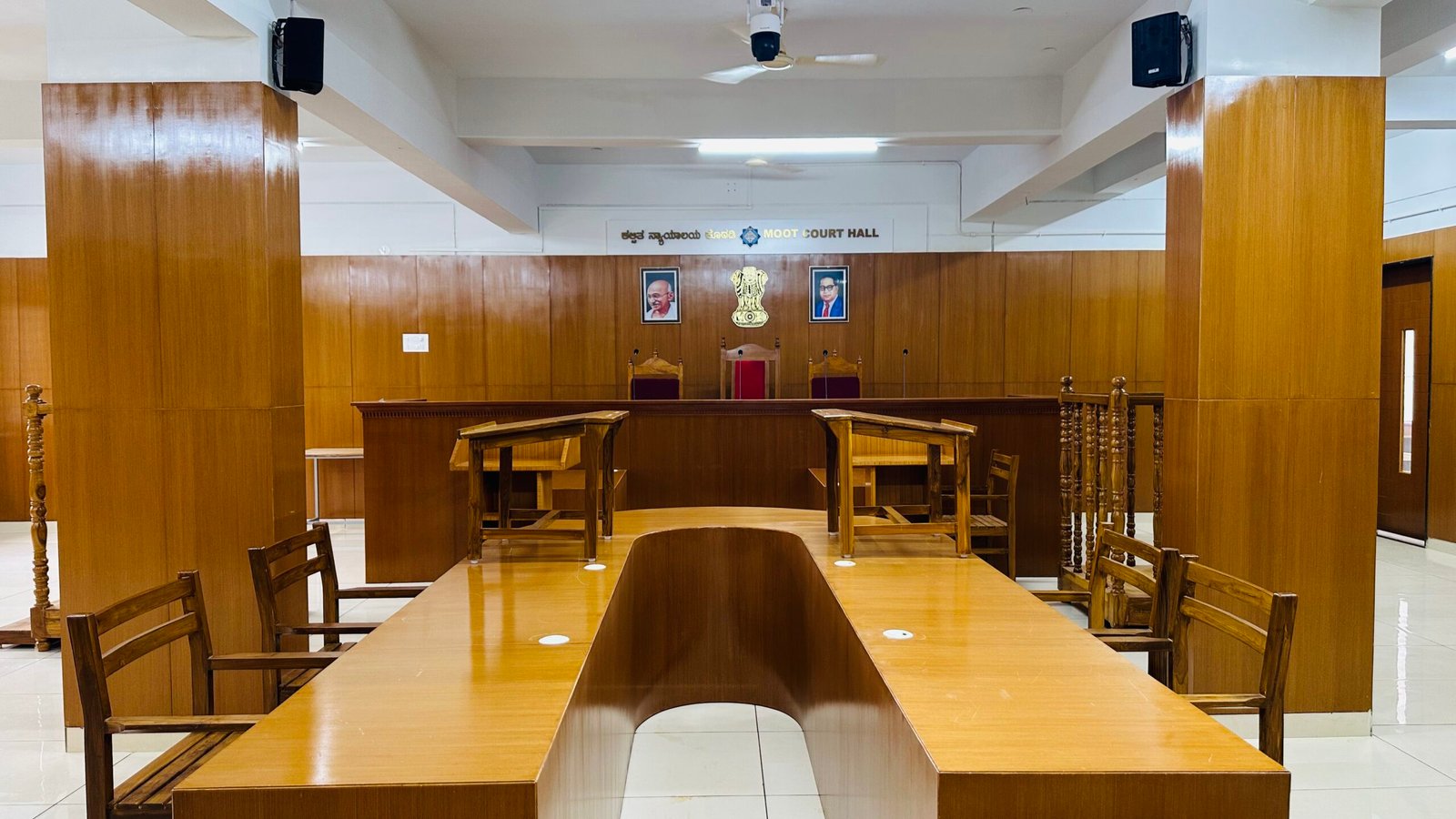
Courtroom Exposure: It mimics the environment of the District Courts, High Courts, and the Supreme Court, helping students build the confidence required for litigation.
Professionalism: It instills court etiquette, legal decorum, and the ability to think on one’s feet when faced with questioning from a “bench” (judges).
Career Advancement: Participation and success in national and international moot court competitions are highly valued by law firms and senior advocates during recruitment.
Compliance: The BCI mandates that institutions provide clinical legal training. An active Moot Court Committee (MCC) is concrete evidence of an institution’s commitment to these standards.
Our Objectives
Developing Legal Research: To guide students in navigating complex legal databases and judicial precedents.
Advocacy Skills: To provide training in oral presentation, cross-examination, and client counseling.
Memorial Drafting: To ensure students master the precision required in writing formal legal briefs and memorials.
National Exposure: To facilitate participation in prestigious internal and external Moot Court Competitions (MCCs).
- • **Crisis Management:** Negotiators must remain calm and adaptable under pressure. Our training builds the emotional intelligence required to handle high-stakes disputes while maintaining professional decorum. • **Strategic Preparation:** Students learn to research and identify the Best Alternative to a Negotiated Agreement (BATNA), ensuring they never enter a negotiation without a clear strategy and fallback plan.
- Minimum GPA/grade requirements as set by the university.
- For graduate programs: a recognized bachelor’s degree with required CGPA.
- For graduate programs: a recognized bachelor’s
Activities & Initiatives
Intra-College Moot Court Competition: An annual event where students compete to test their skills and learn from senior members of the Bar and faculty.
Training Workshops: Regular sessions on “How to Read a Case,” “Citation Styles,” and “Courtroom Decorum.”
Guest Lectures: Interaction with practicing advocates and judges to gain insights into contemporary legal challenges.
- • **Crisis Management:** Negotiators must remain calm and adaptable under pressure. Our training builds the emotional intelligence required to handle high-stakes disputes while maintaining professional decorum. • **Strategic Preparation:** Students learn to research and identify the Best Alternative to a Negotiated Agreement (BATNA), ensuring they never enter a negotiation without a clear strategy and fallback plan.
- Minimum GPA/grade requirements as set by the university.
- For graduate programs: a recognized bachelor’s degree with required CGPA.
- For graduate programs: a recognized bachelor’s
Committee Structure
Faculty Coordinator: [Name/Designation]
Student Convenor: [Name]
Student Secretary: [Name]
Executive Members: [List of Student Representatives]
- Completed secondary education (HSC/A-Level/Equivalent).
- Minimum GPA/grade requirements as set by the university.
- For graduate programs: a recognized bachelor’s degree with required CGPA.
- For graduate programs: a recognized bachelor’s
Committee Structure
Faculty Coordinator: [Name/Designation]
Student Convenor: [Name]
Student Secretary: [Name]
Executive Members: [List of Student Representatives]
- Completed secondary education (HSC/A-Level/Equivalent).
- Minimum GPA/grade requirements as set by the university.
- For graduate programs: a recognized bachelor’s degree with required CGPA.
- For graduate programs: a recognized bachelor’s
Resources for Students
Download: The Art of Memorial Drafting Guide
Repository: Past Moot Problem Statements
Calendar: Upcoming Moot Competitions (2026–27)